
MedINFO Medical Knowledge Platform
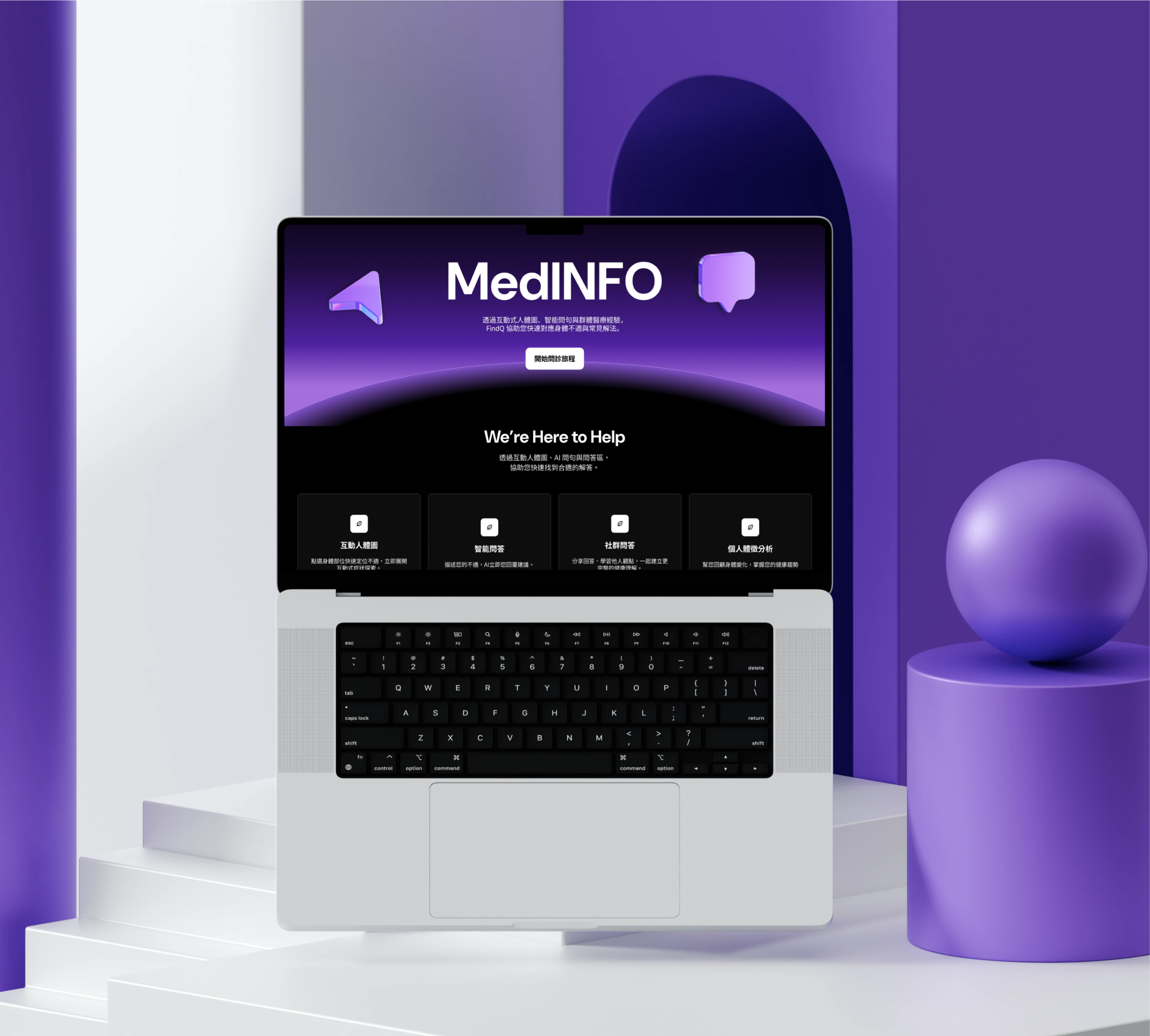
MedINFO is a medical knowledge-sharing platform that combines a localized Chinese-language medical LLM, an intuitive body-map interface, and a cross-platform system architecture, with the core goal of narrowing the urban–rural gap in medical information and reducing the healthcare disparity caused by insufficient medical resources in remote areas.
For people in areas with limited healthcare access, unable to see a doctor promptly, or without access to professional health-education information, users can tap on a body diagram or type their symptoms in natural language. Based on a structured medical knowledge base and a localized LLM, the platform translates medical content into explanations and preliminary information ordinary people can easily understand, helping them quickly clarify their situation and understand possible directions and points to watch for.
When the existing knowledge base doesn't have enough matching information, the question is automatically routed to a community Q&A section, where verified professional physicians respond by sharing their expertise; other users can also add their own care or treatment experience. All contributions are weighted by "effective interaction" metrics (such as likes and replies) to assess content quality and inform future profit-sharing, turning knowledge value that is normally hard to quantify into something measurable and distributable.
The platform plans to introduce a points and credits system to encourage more users to ask questions and share knowledge, while also serving a dual purpose of operations and public good: companies or organizations can purchase "knowledge credits" and donate or allocate them to underserved or remote communities, letting users there use the system free of charge — in effect, a form of corporate social responsibility that gives areas with limited medical resources real-time access to health knowledge and education. Through this design, MedINFO is not just a health-knowledge platform but a piece of medical-information infrastructure that combines AI technology, community participation, and public-good mechanisms, so that "understanding your own condition" is no longer something that only happens at a medical center or in a big city, but can genuinely reach anyone who needs the information.